

IG: naviasoulie
Winter travel outfits get bulky for a simple reason: you’re trying to solve warmth with one big piece (a giant coat or thick sweater) instead of a system. The camera then adds its own problems: puffy layers expand your silhouette, heavy knits look lumpy under coats, and random “warm” add-ons (two scarves, three hoodies) make the outfit feel accidental.
You can stay genuinely warm and still look streamlined in photos if you treat your outfit like a layering kit: a moisture-managing base, a thin insulating midlayer, and a wind-blocking shell. Each layer has a job, and when the jobs are covered, you need less overall “stuff.”
Assumption I’m making: your trip includes lots of outdoor walking, sightseeing, and some time standing still (photos, markets, viewpoints). That “standing still” part matters because you chill faster.
This won’t work if you’re heading into truly extreme cold (or you’ll be stationary for long periods) and you refuse a proper insulated outer layer. In that case, warmth wins and the photos will just have to be puffy.
Quick answer for skimmers
- Use the 3-layer system: base (dry), mid (warm), shell (wind).
- Choose thin, high-warmth materials: merino base, fleece or light insulated mid, windproof shell.
- Make the outer layer do the visual work: one coat that looks great in photos.
- Warmth without bulk comes from protecting wind + neck + hands + feet, not stacking sweaters.
- For damp climates, consider synthetic insulation because it stays warmer when wet than down.
- Wind chill is real: wind strips heat fast, so block it first.
If you only do one thing: swap “another sweater” for a windproof outer layer. It reduces how many layers you need underneath.
The decision framework: warmth without bulk
1) The real enemy is wind (and dampness)
When people say, “It’s not that cold but I’m freezing,” it’s often wind. Wind chill is basically how cold it feels because wind speeds up heat loss from your skin.
So the fastest “de-bulking” move is blocking wind with a shell or coat that actually seals.
2) Bulk usually comes from layering the wrong things
Common “bulky mistakes”:
- Thick cotton hoodies under coats (cotton holds moisture and gets heavy)
- Multiple chunky knits (warm, but hard to layer cleanly)
- Big scarf + big hood + big collar (too much fabric at the neck and shoulders)
- Pants that are too tight to fit a base layer, so you add bulk elsewhere
Instead: go thinner, smarter, and seal gaps.
Step 1: Build a sleek 3-layer outfit (the principle)
REI’s classic layering basics are still the cleanest way to think about this:
- Base layer: wicks sweat off your skin
- Mid layer: insulates and holds warmth
- Shell: blocks wind and precipitation
This is how you stay warm with fewer pieces.
Your “streamlined winter formula”
- Base: thin, fitted (merino or synthetic)
- Mid: light insulation (fleece, thin puffer, or sweater that is not chunky)
- Outer: coat or shell that blocks wind and fits over your midlayer without strain
If your outer layer blocks wind well, you can usually reduce the thickness of everything underneath.
Step 2: Choose base layers that warm without puffing
You want a base layer that:
- fits close (no folds)
- moves moisture away from skin (so you don’t get cold after walking)
Merino is popular for winter travel because it insulates well and manages moisture. Some technical wool sources note wool can absorb a meaningful amount of moisture while still feeling warm and not clammy.
A practical way to use that:
- Top: merino long sleeve or thin thermal
- Bottom: thin thermal leggings under trousers if you’ll be outside a lot
Fit tip that matters in photos: size base layers like you would activewear. If it’s loose, it wrinkles under clothes and adds visual bulk.
Step 3: Pick one midlayer that gives warmth per inch
This is where you win the “warm but not puffy” game.
Sleek midlayer options
- Grid fleece or thin fleece: warm, compressible, not bulky under a coat
- Light insulated jacket/vest: great warmth-to-weight, especially for stop-and-go sightseeing
- Fine knit sweater: only if it layers flat (think merino or tight weave)
Down vs synthetic midlayers (what actually matters on trips)
- Down is very warm for its weight, but can lose performance when wet.
- Synthetic insulation tends to cope better with moisture, and one outdoor brand notes it can retain around 80-95% of its performance when wet.
If your trip is cold and damp (snowy city, rainy winter coast), synthetic can be the less stressful choice.
One honest trade-off (no fix): the warmest lightweight option can be more expensive. That is just reality in insulation. You can still do this on a budget, but the “thin and very warm” pieces are often pricier.
Step 4: Make the outer layer do the photo work
If you want better winter photos, stop trying to style every layer. Style the outer layer.
What looks good in photos and stays warm
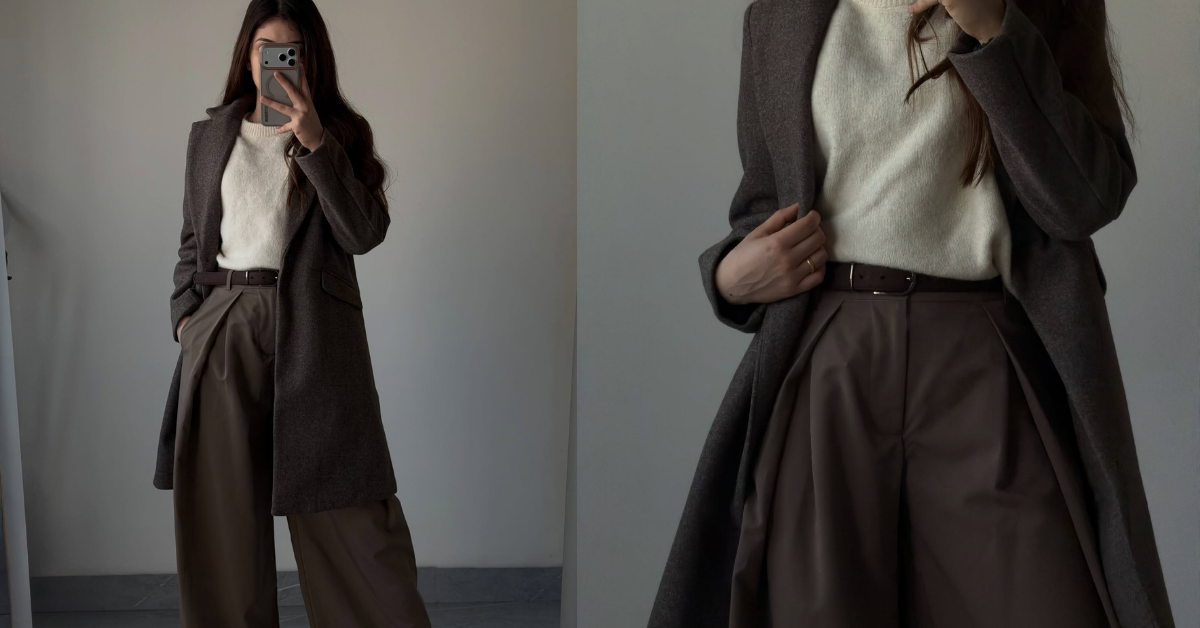
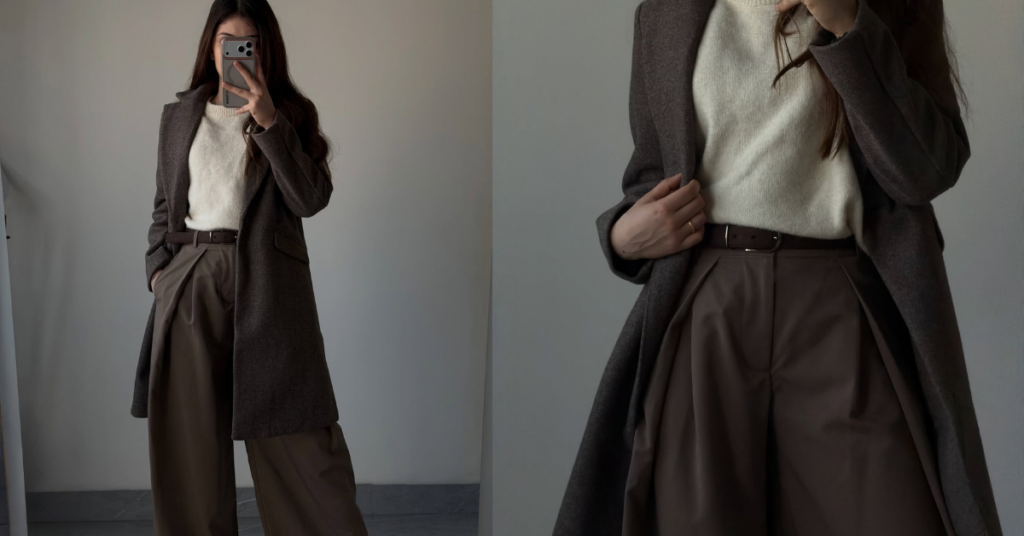
- A longer coat (mid-thigh to calf): reads intentional and sleek
- A belt or waist shaping: prevents “marshmallow” silhouette
- A structured wool coat with room for layers: polished, timeless
- A streamlined puffer with good quilting: modern and functional, especially if it has a cinch
What makes coats look bulky (even if they’re warm)
- Too short + too puffy (widens your torso)
- Oversized shoulders + big hood + thick scarf (top-heavy)
- Tight coat over thick layers (creases and pulls)
Fit test: put on your full layering system and zip the coat. You should be able to move your arms without strain. If it feels tight, your photos will show it.
Step 5: Seal the gaps (this is where warmth hides)
You can wear a sleek coat and still freeze if air is getting in at the neck, wrists, and ankles.
The non-bulky warmth upgrades
- Neck: a thin merino neck gaiter or a scarf that is not oversized
- Hands: thin liner gloves + nicer outer glove (liners keep warmth without puff)
- Feet: warm socks + shoes/boots that are not tight (compressed socks = colder)
- Head: beanie that covers ears (you lose heat fast from exposed areas)
Wind chill can push conditions into frostbite risk territory faster than people expect, especially on exposed skin, so covering those areas matters.
This is optional. Skip it if you’ll barely be outside and your trip is mostly indoor museums, taxis, and cafes. But if you’ll be outdoors, sealing gaps does more than adding another sweater.
Step 6: Outfit formulas that photograph well
These are simple “resort-style formulas,” but for winter.
Formula A: City sightseeing (the most photogenic)
- Base: fitted thermal top
- Mid: thin fleece or fine knit
- Outer: structured coat (belted if possible)
- Bottom: straight-leg trousers or jeans + optional thermal leggings
- Shoes: boots that can walk 15,000 steps
Why it works: the coat looks like the outfit, everything else is clean.
Formula B: Cold and windy viewpoints
- Base: merino
- Mid: light insulated jacket
- Outer: windproof shell or wind-blocking coat
- Accessories: beanie + neck gaiter + gloves
Why it works: wind-blocking means fewer layers.
Formula C: Dinner photos without freezing on the walk there
- Base: thin thermal
- Dressier mid: fine knit or blouse + thin insulated vest (hidden warmth)
- Outer: wool coat
- Bottom: trousers or skirt with thermal tights
This won’t work if your dinner outfit requires a tight-fitting dress and you refuse tights or base layers. Tight + cold is a miserable combo.
Step 7: Packing strategy that prevents “I need my biggest coat”
Pack by roles, not by items
- 2 base tops (rotate)
- 1 base bottom (leggings or tights)
- 1 midlayer (fleece or light insulated)
- 1 outer layer (your “photo coat”)
- 1 wind/rain shell (if forecast is wet or windy)
- 1 hat + 1 glove system + 1 neck piece
- 2 warm socks
If you keep the palette tight (black, navy, camel, cream), everything looks cohesive even when you repeat pieces.
Photo tricks that make winter outfits look less bulky
These are small, but they matter:
- Keep pockets empty (phones and gloves create lumpy lines).
- Choose one “statement” at a time: either a bold scarf or a bold coat, not both.
- Half-zip or slightly open coat only if your midlayer looks clean (no hoodie bunched up).
- Avoid stacking collars (turtleneck + scarf + high collar looks thick in photos).
- Use a belt or crossbody strap to create shape (but keep it sleek, not bulky).
I usually tell people to pick one coat they genuinely love in photos and stop fighting it. When the outer layer looks right, your whole winter album looks better.
Common mistakes (and quick fixes)
- You’re warm while walking, freezing in photos
- Fix: you need a midlayer with insulation (not just a sweater) and better wind blocking.
- You’re wearing too many thick pieces
- Fix: swap one thick knit for a thin base + proper midlayer.
- Your shoes are too tight for thick socks
- Fix: go up in sock warmth, not sock thickness, and make sure boots have room.
- You keep adjusting scarves and hoods
- Fix: simplify neck area. One slim neck layer beats three bulky ones.
Variations by trip type
Snowy city break (cold, dry)
- Down can work great if it stays dry.
- Prioritize wind blocking and warm accessories.
Wet winter trip (cold, damp, slushy)
- Consider synthetic insulation for midlayer warmth even when damp.
- Shell matters more (wind + precipitation).
Northern lights or lots of standing still
- Bring a warmer midlayer than you think you need.
- Add chemical hand warmers if you hate gloves (small, high impact).
FAQ
Is it better to wear one big coat or multiple thin layers?
For travel and comfort, multiple layers usually win because each layer has a job: base manages moisture, mid insulates, shell blocks wind and weather.
Why do I feel cold even when I’m “bundled up”?
Often because wind is cutting through, or you’re damp from walking. Wind chill increases heat loss and makes it feel much colder.
What base layer material is best for travel?
Merino is popular because it manages moisture well and can still feel warm even when damp.
Down or synthetic for a midlayer on trips?
If it’s dry and very cold, down can be great for warmth-to-weight. If it’s wet or you expect damp conditions, synthetic insulation can retain more performance when wet.
How do I look less puffy in photos?
Let your coat be the outfit: choose a longer, structured or belted outer layer, keep midlayers thin, and reduce bulky neck stacking.
How many layers is “too many”?
If you can’t move freely, your coat pulls, or you feel stuffed, it’s too many. Better to improve wind blocking and upgrade one midlayer.
Just a little note - some of the links on here may be affiliate links, which means I might earn a small commission if you decide to shop through them (at no extra cost to you!). I only post content which I'm truly enthusiastic about and would suggest to others.
And as you know, I seriously love seeing your takes on the looks and ideas on here - that means the world to me! If you recreate something, please share it here in the comments or feel free to send me a pic. I'm always excited to meet y'all! ✨🤍
Xoxo Emily