

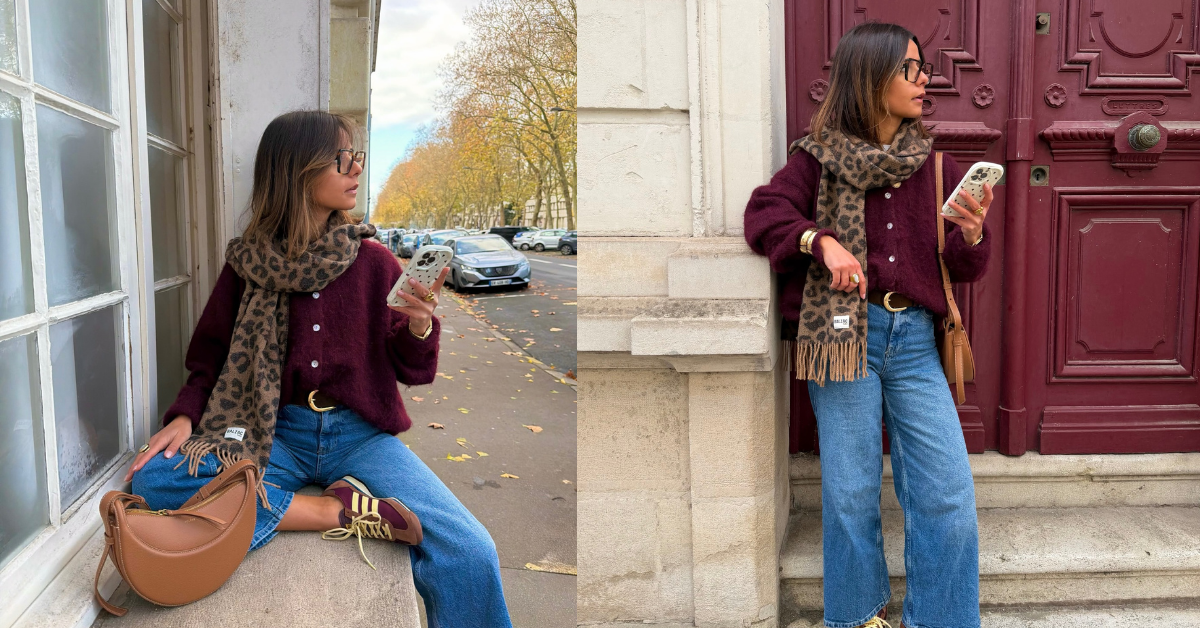

IG: vidanaaaa
Fall travel packing goes wrong for one simple reason: you’re trying to plan for every possible temperature, and you end up bringing a suitcase full of “maybe” items. Cute coat you never reach for. Sweater that’s too bulky to carry around. A scarf that looked like a good idea at home but feels annoying the second you’re in an airport.
The fix is not more options. It’s a layering system that matches real life: warm indoors, chilly outdoors, surprise rain, lots of walking, and at least one day where you’re out longer than planned.
Here’s the approach that keeps your bag lighter and your outfits more wearable: build a small set of layers that solve problems (wind, wet, warmth swings), and make sure every piece can sit on your body for hours without driving you nuts.
Quick answer for skimmers
- Build around the 3-layer system: base layer (handles sweat), mid layer (warmth), outer layer (wind/rain).
- Pack one insulation layer (fleece, sweater, light puffer) and one shell (wind/rain). That combo covers most fall weather shifts.
- Choose base layers in wool or synthetics, not cotton, if you’ll be outside in cold or wet weather.
- If there’s any chance of real cold, remember the basics: dress in layers and cover exposed skin.
- Travel rule that saves space: repeat bottoms, rotate tops, swap outer layers.
- If you only do one thing: pack a packable shell you’d actually wear (not a “just in case” raincoat you hate).
The decision framework: pack for your temperature range, not the season
Fall is not one temperature. It’s a swing.
Before you pack, think in ranges:
1) What’s your lowest realistic temp?
This includes early mornings and late nights, not just noon.
2) What’s your warmest realistic temp?
Fall sun + walking + indoor heating can feel surprisingly warm.
3) Will you be wet or windy?
Wind and damp make “mild” temps feel cold fast, which is why an outer layer matters.
4) How much walking are you doing?
If you’re walking a lot, you’ll run warmer and you’ll need layers you can take on and off easily.
This won’t work if you pack based on aesthetics only. If the coat is cute but you hate wearing it, you will not magically wear it on your trip. Pack what you already reach for at home.
Step 1: Start with your “base outfit” that works indoors
Most fall trips are warm indoors. Hotels, restaurants, museums, cars, trains. Your base outfit should be comfortable in those spaces.
Your base outfit is usually:
- a tee, long sleeve, or thin knit
- pants or jeans you can sit in for hours
- shoes you can walk in
I usually tell people to stop trying to pack “a look” for every day and instead pack one base formula you’d happily wear three times. That’s the whole game.
Base layer picks that actually get worn
REI’s layering guidance breaks down why base layers matter: they help manage sweat so you stay comfortable as conditions change.
And the CDC specifically notes that in cold conditions, inner layers should be fabrics that hold heat and do not absorb moisture (like wool, silk, or polypropylene).
Practical translation for fall travel:
- If you’ll be active outside: bring one true base layer top (merino or synthetic).
- If your trip is mostly city and indoors: a normal long sleeve is fine, but still pick something that layers smoothly.
Step 2: Choose two mid layers you’ll rotate
Mid layers are where your outfits start looking “fall.” They also control your warmth without making your bag explode.
Pick two of these, max:
- Light sweater (thin enough to layer under a jacket)
- Fleece or knit zip (great for walking days)
- Cardigan (best for indoor temperature swings)
- Overshirt or shacket (cute, but only if it fits under your outer layer)
A common mistake: packing only chunky sweaters. They’re cozy, but they’re heavy and awkward to carry when you take them off.
A simple test: can you fold it and fit it into your day bag without becoming angry? If not, it’s a “stay at home” sweater.
Step 3: Pick one outer layer that blocks wind, plus a shell if it’s wet
This is where “layers you’ll actually wear” becomes real.
Option A: The everyday outer layer
This is the jacket you wear constantly in fall:
- denim jacket
- leather jacket
- bomber
- light trench
- light puffer
Option B: The shell you forget until you need it
A shell is the layer that shields you from wind and rain. REI’s layering basics calls this the “outer (shell) layer.”
If your forecast includes rain or you’re going somewhere known for changeable weather, pack a shell you can live with. A shell that feels sweaty, loud, or stiff will stay in your bag.
For colder destinations, official safety guidance is consistent: wear layers, add wind-resistant outerwear, and cover extremities.
The real-world sweet spot for fall trips:
- one “normal cute jacket”
- one lightweight shell (packable)
That combo handles most situations without overpacking.
Step 4: Build a mini capsule you can repeat without boredom
Here’s a realistic 4-5 day fall trip capsule that doesn’t feel repetitive.
Tops (5)
- 2 base tops (tee, long sleeve, thin knit)
- 1 base layer top (merino/synthetic) if you’ll be outside a lot
- 1 mid layer (sweater or fleece)
- 1 nicer top (still layer-friendly)
Bottoms (2)
- 1 “walk all day” pant or jean
- 1 second bottom for variety (or a skirt if that’s your thing)
Mid layers (2)
- 1 cozy layer (cardigan, sweater)
- 1 practical layer (fleece, overshirt)
Outer layers (1-2)
- 1 main jacket
- 1 shell if wet or windy is likely
Shoes (2)
- 1 walking shoe
- 1 nicer shoe (still comfortable)
Accessories (small, high impact)
- hat or beanie if chilly (helps more than you think)
- scarf (optional)
- thin gloves if cold destination
This is optional. Skip it if you hate accessories: bring one warm hat instead. Hats solve warmth and bad-hair days in one move.
Step 5: Outfit formulas you’ll actually wear
These are plug-and-play. Pick 2-3 and repeat.
1) The airport-to-anywhere outfit
- base top + comfortable pants
- mid layer you won’t overheat in
- main jacket
- walking shoes
Why it works: you stay comfortable indoors, and you can add warmth outside.
2) The “long walking day” outfit
- base layer top (if chilly) + breathable mid layer
- pants you can move in
- shell in your bag if weather is changeable
- walking shoes
3) The dinner outfit that doesn’t require a new wardrobe
- same pants or jeans
- nicer top (or same base top with better accessories)
- your main jacket
- your “nicer” shoe
The trick is not switching everything. Switch one thing and keep the rest stable.
The 3 most common fall packing mistakes
Mistake 1: Packing for “cold” with bulky items
Fix: use layers. Trapped air between layers helps insulation, and you can adjust as temps change.
Mistake 2: Packing cotton-heavy basics for damp cold
Fix: if you’ll be outside in cold and wet, choose inner layers that hold heat and do not absorb moisture.
Mistake 3: Bringing “fantasy pieces”
Fix: pack what you wear in real life. If you don’t wear skirts at home in October, you probably won’t wear them on cobblestones in a new city.
Here’s a trade-off with no perfect fix: if you want the “cute oversized coat” look, it often means the coat is bulky and annoying to carry indoors. You can either pick the look or pick packability. Some trips you get both, many trips you don’t.
Variations by trip type
City weekend (museums, restaurants, lots of indoors)
- prioritize lighter mid layers (cardigan, thin sweater)
- bring one nicer shoe that still walks well
- outer layer can be more style-focused, but keep it comfortable
Mountain or cabin fall trip
- include a true base layer top and a wind-blocking outer layer
- add beanie and gloves if temps drop
- expect bigger temp swings than you think
Rainy destination
- shell becomes non-negotiable
- choose shoes that can handle wet pavement (grip matters)
- keep bottoms darker to hide splashes
Road trip (cars, stops, casual meals)
- comfort-first base
- one warm mid layer you can sleep in if needed
- shoes that slip on and off easily
Bonus: the carry-on packing detail people forget
If you’re flying with only a carry-on and you pack toiletries, remember the TSA liquid limits for carry-ons. TSA spells out the liquids, gels, aerosols rule and size limit.
Practical takeaway: keep your layering pieces doing the heavy lifting so you don’t “solve comfort” by overpacking extras.
FAQ
How many layers do I really need for fall travel?
Usually 3: a base, a mid, and an outer. That’s the standard layering approach because each layer has a job.
What’s the single most useful layer to pack?
A shell, if weather is unpredictable. It protects against wind and rain, and it lets you wear lighter mid layers underneath.
Do I need a base layer if I’m not hiking?
Not always. But if you’ll be outside a lot in cool, damp conditions, a base layer can make you more comfortable because it manages moisture and warmth.
How do I avoid overpacking sweaters?
Bring one sweater you love and one lighter mid layer. Repeat them. You’ll wear them more than four different chunky knits.
What should I do if the forecast changes right before I leave?
Pack the shell and one warm mid layer. Layers give you flexibility when temps shift.
What if I get cold easily?
Add warmth by layering, not by bringing the biggest coat you own. Safety guidance emphasizes wearing several loose layers and covering exposed skin.
Just a little note - some of the links on here may be affiliate links, which means I might earn a small commission if you decide to shop through them (at no extra cost to you!). I only post content which I'm truly enthusiastic about and would suggest to others.
And as you know, I seriously love seeing your takes on the looks and ideas on here - that means the world to me! If you recreate something, please share it here in the comments or feel free to send me a pic. I'm always excited to meet y'all! ✨🤍
Xoxo Emily