


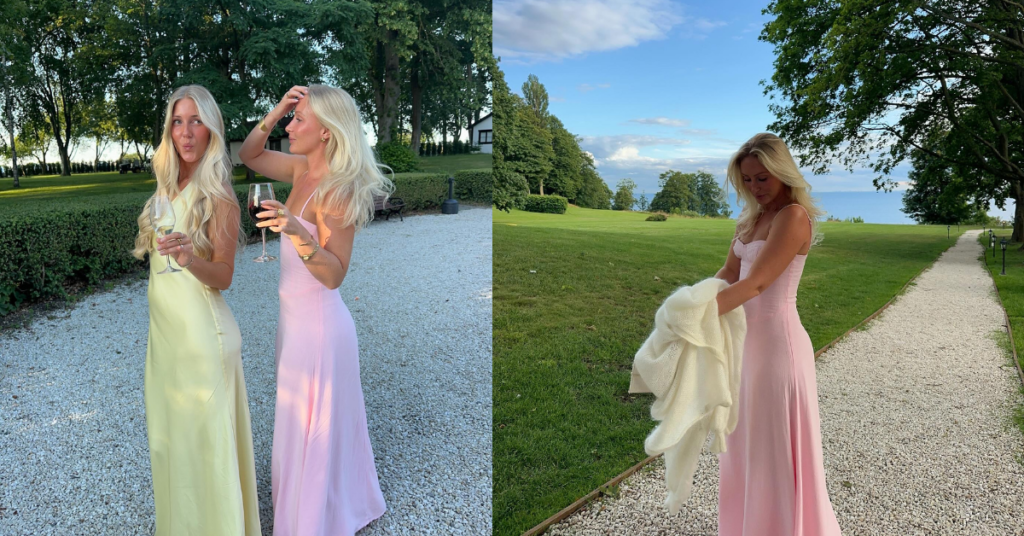
IG: eleonorlq
You can absolutely do a beach trip without turning into a walking postcard.
The mistake most people make is thinking “beach vacation” automatically means loud prints, floaty coverups, raffia everything, and outfits you would never wear at home. Then you overpack, feel costume-y, and still end up wearing the same two things.
A better approach is to pack a hot-weather version of your normal style, then add just enough beach-specific gear to be comfortable: sun protection, something you can throw over swimwear, and shoes that survive sand.
The goal is not to look like you live on a yacht. The goal is to feel like yourself, just with better fabric choices and a smarter system.
Quick answer for skimmers
- Choose a palette you already wear (black, navy, cream, olive, denim, chocolate). Then add one accent color if you want.
- Pack “your style, but breathable”: linen, cotton poplin, viscose, lightweight knits. (Linen will wrinkle. That is the price of admission.)
- Build outfits around 3 repeatable formulas (day, beach, dinner). Repetition is the point.
- Bring one swim look you’ll actually wear plus one cover option that doesn’t feel beachy (oversized shirt, linen pants, simple slip dress).
- Plan one slightly nicer outfit for dinners because many resorts have some version of resort casual expectations.
- Sun protection is not a vibe, it’s logistics: hat, sunglasses, sunscreen, and ideally UPF clothing for long sun days.
- Keep liquids rules in mind if you are carry-on only: the 100 ml limit still applies in many places.
If you only do one thing: pack like you’re going to a warm city that happens to have a beach, not like you’re building a new identity.
The decision framework
Step 1: Decide what “not beachy” means for you
Pick 2 to 3 style boundaries. Examples:
- No tropical prints, no bright coverups
- No flip-flops outside the pool
- Neutral palette only
- Sporty minimal instead of boho
- Clean lines, minimal hardware, little to no rattan
This is important because “not beachy” can mean tailored and sharp for one person, and soft minimal for another.
Step 2: Use the 3-outfit-lane system
Think in lanes, not individual outfits:
- Day lane (exploring, coffee, shopping, museums)
- looks like your normal wardrobe, just heat-friendly
- Beach lane (sand, pool, sunscreen, wet hair)
- simple, washable, quick-dry, and not precious
- Dinner lane (nice restaurant, resort bar, sunset drinks)
- one step more polished, often expected at resorts
Most overpacking happens because people try to create a separate wardrobe for each moment instead of building a small set that crosses lanes.
Step 3: Pack by formulas, not items
Here are three formulas that work for almost any “I don’t do beachy” style:
Formula A: Minimalist day uniform
- breathable tee or tank + wide-leg pant or long short + clean sandals or sneakers + sunglasses
Formula B: Non-beachy beach cover
- one-piece or simple bikini + oversized button-down or longline tee + linen pants or simple shorts
Formula C: Dinner without trying too hard
- slip dress or knit dress OR tailored pants + nicer top + low heeled sandal + small bag
I usually tell people to stop packing “options” and start packing defaults. On vacation, a good default outfit is freedom.
Step 4: Choose a packing structure (so you don’t bring 17 tops)
A simple method is the 5-4-3-2-1 style formula:
- 5 tops
- 4 bottoms
- 3 shoes
- 2 layers or dresses
- 1 set of accessories (belt, jewelry, sunglasses)
You can flex it up or down, but it prevents the classic “all tops, no bottoms that match” problem.
The “not beachy” beach capsule (what to pack)
1) Tops: keep them plain, upgrade the fabric
Pick 4 to 6 tops total, depending on trip length:
- 2 easy daytime tops (tee, tank, knit top)
- 1 button-down (linen or cotton poplin)
- 1 dinner top (silky, textured knit, or a structured tank)
- 1 optional wildcard (something you love that photographs well)
If your style is sharp, go for clean necklines and strong shapes.
If your style is softer, go for drape and texture, but keep it simple.
2) Bottoms: choose two “workhorses” and repeat them
Bottoms do the heavy lifting on a warm trip. I’d bring:
- 1 wide-leg pant (linen, cotton, or a travel fabric)
- 1 long short or bermuda (more polished than tiny cutoffs)
- 1 easy skirt or second pant if you hate shorts
- 1 swim-adjacent bottom (like pull-on linen shorts) if you want
This won’t work if you only pack tight jeans “because they go with everything.” In real beach heat, you’ll avoid them and then feel like you have nothing to wear.
3) Swimwear that doesn’t scream “beach”
If you don’t want a beachy wardrobe, start here.
- Black or navy one-piece
- Simple sporty bikini
- Rash guard top if you burn easily or want more coverage
Sun protection matters more than people think, especially if you are in and out of water all day. The CDC recommends broad-spectrum sunscreen and reapplying at least every 2 hours, and after swimming or heavy sweating.
4) The cover piece that saves your dignity
This is the item that makes you feel like yourself when you’re not actively in the water.
Non-beachy options:
- oversized white or blue button-down
- long, simple shirt dress
- linen trousers you can pull on over swimwear
- a plain wrap skirt (no tassels, no prints)
This is optional. Skip it if you know you will basically go straight from room to pool and back, and you’re staying somewhere super relaxed.
5) Shoes: pick function first, then style
You want shoes that can handle sand, heat, and walking. A very workable trio:
- one pair of flat sandals you can walk in
- one pair of sneakers (for exploring)
- one nicer sandal (low heel or sleek flat) for dinner
If you only want two pairs, drop the “nice” pair and dress up with jewelry, hair, and a better bag.
6) Accessories: keep them intentional, not themed
Not beachy does not mean boring. It means you choose accessories that would still make sense in a city.
Bring:
- sunglasses
- a hat you’d actually wear (a plain cap or a structured straw hat with minimal detailing)
- a small crossbody or shoulder bag
- one piece of statement jewelry or a simple set
7) Sun and skin kit (the part people forget)
A basic kit that prevents regret:
- broad-spectrum sunscreen (SPF 15+ minimum per CDC, many people choose higher)
- lip balm with SPF (CDC specifically calls out lips as often missed)
- after-sun moisturizer
- sunglasses
- UPF clothing if you spend long hours outside. The Skin Cancer Foundation notes UPF 50+ as excellent protection and uses UPF 50 for its Seal of Recommendation.
The key styling trick: you’re not avoiding the beach, you’re avoiding the costume
Lean on silhouettes you already love
- If you’re a blazer person, bring a lightweight layer for evenings.
- If you’re a dress person, bring one sleek midi dress, not five floaty ones.
- If you like minimal streetwear, bring clean basics and let your tan, hair, and jewelry do the vacation part.
Choose “vacation fabrics,” not “vacation patterns”
Here’s the honest trade-off: breathable fabrics like linen are comfortable in heat, but they wrinkle because of the fiber structure. You can reduce wrinkles with packing tricks, but you can’t fully eliminate them without changing the fabric.
If wrinkles drive you insane, swap linen for:
- cotton poplin
- lightweight knits
- travel synthetics (less romantic, more practical)
No perfect answer. It depends on what annoys you more: wrinkles, or feeling hot and sticky.
Use one dinner upgrade
A non-beachy wardrobe still needs one “evening signal,” especially at resorts where casual dinner norms exist.
Easy upgrades:
- earrings
- a better sandal
- a sleek bag
- a lip color
- hair pulled back cleanly
Packing list you can copy
3–5 day trip
- 3–4 tops
- 2 bottoms + 1 extra (skirt or shorts)
- 1 swim
- 1 cover piece
- 2 shoes
- 1 dinner outfit
- sun kit
7–10 day trip
Use the 5-4-3-2-1 structure as a cap.
- 5 tops
- 4 bottoms
- 2 swims (if you actually swim daily)
- 1 cover piece
- 3 shoes
- 2 dresses or layers
Laundry tip: pick a sink-wash top and underwear plan. That alone lets you pack less without feeling deprived.
Airport liquids rules (quick, practical)
If you’re carry-on only, you still have to respect liquids restrictions at most airports:
- TSA: travel containers up to 3.4 oz / 100 ml, in one quart-sized bag.
- EU guidance: containers up to 100 ml in a 1-liter transparent bag, with exceptions for medicines and baby food.
Some airports are changing screening tech and rules can differ by airport or terminal, so check your departure airport’s security page if you want to bring full-size products.
Options by personal style
If your style is minimalist and monochrome
Pack: black, white, and one soft neutral.
Go-to outfit: black tank + linen pant + flat sandal + gold earrings.
If your style is classic and tailored
Pack: bermuda shorts, a button-down, a structured dress.
Go-to outfit: button-down half-tucked into shorts + leather sandal + watch.
If your style is sporty
Pack: sleek athleisure pieces you can wear to coffee and a rash guard for the beach.
Go-to outfit: fitted tank + lightweight jogger + clean sneaker.
If your style is feminine but not “tropical”
Pack: one slip dress, one midi skirt, soft colors like chocolate, blush, or navy.
Go-to outfit: midi skirt + fitted knit top + minimal sandal.
FAQ
How do I look like I’m on vacation without dressing beachy?
Wear your normal style, but swap in breathable fabrics, slightly looser silhouettes, and one vacation-friendly accessory (sunglasses, a hat, or a simple necklace).
What do I wear to dinner at a resort if I hate resort wear?
A slip dress, a knit dress, or tailored pants with a nicer top usually works. Resort casual generally means polished, not formal, and often discourages overly beachy items like flip-flops and tank tops in nicer dining spaces.
Do I need special sun-protective clothing?
Not always, but it’s helpful if you’re outside for long stretches. UPF-rated clothing can add protection, and UPF 50+ is considered excellent.
How often should I reapply sunscreen?
At least every 2 hours, and after swimming or heavy sweating.
What is one thing I should not skip?
Shoes you can actually walk in. A beach trip often involves more walking than you expect.
What if I hate sandals?
Bring breathable sneakers and one closed-toe flat, but be realistic: in very hot climates, closed shoes can feel miserable.
Just a little note - some of the links on here may be affiliate links, which means I might earn a small commission if you decide to shop through them (at no extra cost to you!). I only post content which I'm truly enthusiastic about and would suggest to others.
And as you know, I seriously love seeing your takes on the looks and ideas on here - that means the world to me! If you recreate something, please share it here in the comments or feel free to send me a pic. I'm always excited to meet y'all! ✨🤍
Xoxo Emily