

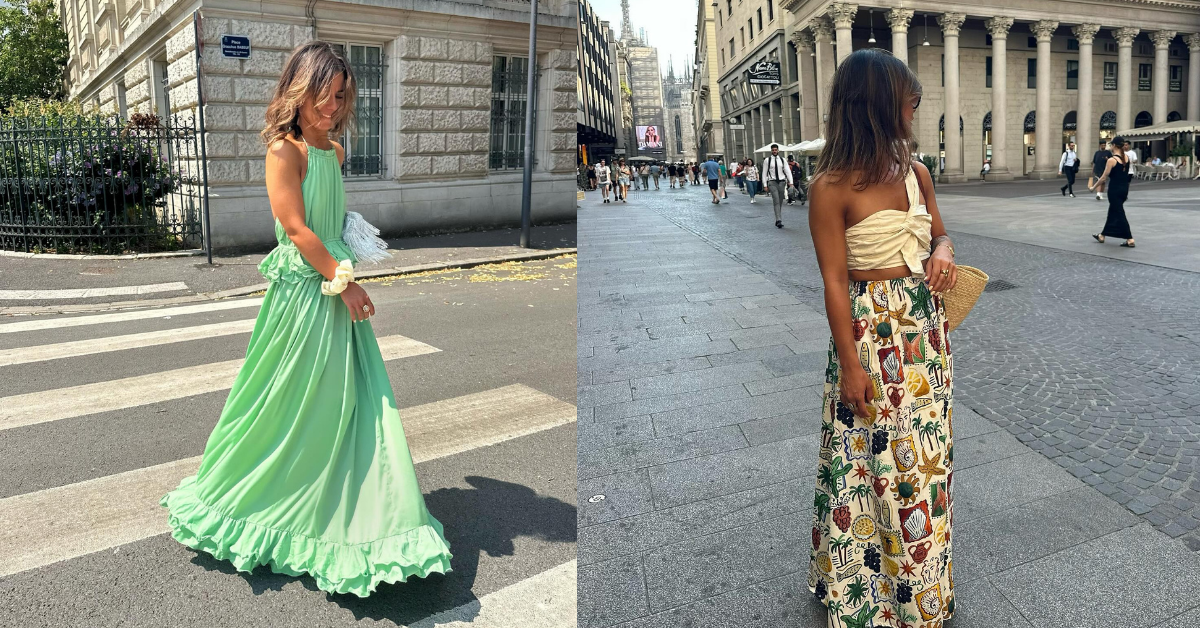
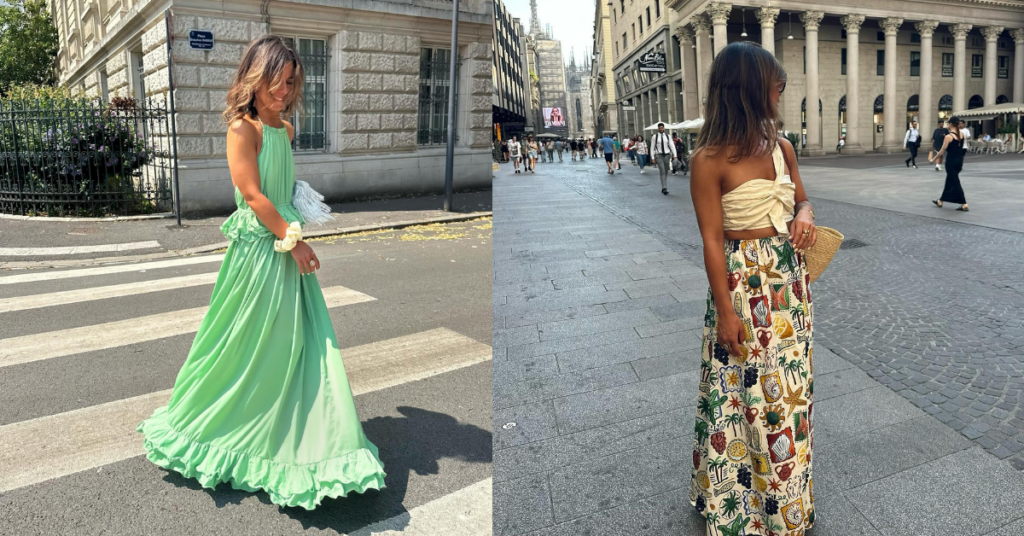
IG: vidanaaaa
Summer travel outfits fail in two very predictable ways:
- You look damp (underarms, back, waistband, thighs) even when you feel fine.
- You look rumpled the second you sit in a car, plane, or café chair.
And the annoying part is this: you can do everything “right” and still lose if your clothes have the wrong combo of absorbency, dry time, and crease recovery.
So instead of “pack linen!” or “only wear black!”, think like this:
- Sweat marks are about wetness + visibility.
- Wrinkles are about fiber behavior + how the garment is built and packed.
- You want fabrics that either dry fast or hide wetness, and fabrics that either bounce back or look intentional when lived-in.
Based on fabric properties, garment construction, and travel practicality (not firsthand testing), here’s a simple system that works.
Quick answer for skimmers
- Build your capsule around two fabric lanes:
Lane A (breathable and airy): linen blends, cotton poplin, seersucker, lightweight denim/chambray. Linen wrinkles easily because it has poor elasticity, so choose blends or accept the texture.
Lane B (polished and low-wrinkle): quality polyester or nylon blends, travel crepe, technical weaves. Synthetics tend to resist wrinkles more naturally than many cellulosics. - Avoid the worst-of-both for summer travel: heavy cotton that stays wet, or cheap polyester that traps odor.
- For sweat marks, pick mid-tones, prints, or textured fabrics (they disguise wet-to-dry contrast better than flat light solids).
- Cut matters as much as fabric: give your underarms and upper back space. Tight armholes and clingy backs broadcast sweat.
- If sweat is a big issue for you, use antiperspirant on dry skin before bed, then deodorant in the morning. Dermatologists recommend night application for stronger antiperspirants in hyperhidrosis self-care.
- Packing fix: fold less, roll more, and hang immediately. Your body heat and steam from a shower can help relax light wrinkles, but linen will still be linen.
If you only do one thing: pack one “forgiving hero outfit” (a wrinkle-resistant top + breathable bottom) that you can wear on your hottest, longest day.
The decision framework
Step 1: Choose your “sweat strategy”
You need one of these approaches (mixing works too):
A) Fast-dry strategy
You let sweat happen, but you choose fabrics that move moisture and dry quickly. Moisture-wicking works by moving liquid through the fabric via capillary action and spreading it for faster evaporation.
B) Hide-it strategy
You pick colors, prints, and textures that make wet patches hard to see.
C) Reduce-sweat strategy
You reduce how much sweat reaches the garment (antiperspirant routines, breathable cuts, sweat guards). The American Academy of Dermatology and Cleveland Clinic both emphasize antiperspirant on dry skin and often at night for best effect.
This won’t work if you’re traveling in extreme humidity (think 85 percent plus) and walking all day. At that point, the goal shifts from “never sweaty” to “drying faster and looking intentional anyway.”
Step 2: Choose your “wrinkle strategy”
Wrinkles come from fiber and finishing, but also from how a garment is built and packed.
A) Natural texture strategy
You wear fabrics that wrinkle, but look good wrinkled (linen, gauze, seersucker). Linen wrinkles easily because of poor elasticity.
B) Bounce-back strategy
You wear fibers and blends that recover better (many poly/nylon blends). Polyester fibers are known for good resiliency and dimensional stability, and synthetics are often naturally more wrinkle-resistant than many cellulosics.
C) Finish strategy
You rely on wrinkle-resistant finishes. Note: durable press finishes involve chemical processes, and some people prefer to avoid these if they have sensitive skin.
The best summer travel fabrics (and what to avoid)
1) Linen and linen blends
Why people love it: airy, comfortable in heat.
The problem: it wrinkles easily because it has poor elasticity.
The fix: choose linen blends (linen-cotton, linen-viscose, linen with a touch of elastane) for fewer hard creases, or just accept the wrinkles as part of the look.
When linen works best: beach towns, casual cities, anywhere the vibe is relaxed.
When linen is annoying: business travel, long sit-down transit days, “I need to look crisp at 2 pm” plans.
Clear trade-off (no perfect solution): 100% linen breathes beautifully, but it will crease. If you want crisp, you usually give up some of that easy airflow.
2) Cotton poplin, chambray, seersucker
These are your “structured but breathable” lane.
- Poplin: holds shape, usually less clingy, hides sweat better than thin jersey.
- Chambray: forgiving, casual-polished, good for shirts and shirt-dresses.
- Seersucker: the texture physically lifts fabric off skin, so it can feel cooler and looks fine with wrinkles.
If you only pack one summer fabric type besides linen, I’d pick something in this family because it looks intentional even when you’re tired.
3) Travel crepe, quality polyester blends, nylon blends
This is your “polished and low-wrinkle” lane.
Why it works: synthetics tend to resist wrinkles more naturally than many cellulosic fabrics, and polyester fibers have low moisture absorbency and good resiliency.
The catch: some polyester can trap odors and feel less breathable, especially in cheap, dense weaves.
How to shop smarter:
- look for texture (crepe, pebble, micro-texture)
- look for venting (looser weaves, open cuts)
- favor blends (a bit of elastane for comfort, sometimes a bit of natural fiber for hand feel)
4) Merino (for re-wearing, not for everyone)
Merino is popular in travel wardrobes because it’s often described as temperature-regulating and odor resistant, which can help you re-wear pieces.
Reality check: merino can be pricey and can pill or feel delicate depending on the knit and fiber quality.
Also, not everyone likes the feel in peak summer. If you hate it, skip it.
Fabrics that often look sweaty or wrinkled fast
- Thin cotton jersey: absorbs sweat and can stay visibly damp.
- Cheap poly satin or clingy poly knits: show every patch and crease, and can hold odor.
- Rayon/viscose in very lightweight weaves: can show sweat and crumple easily, plus slow dry in humidity.
Color and print choices that hide sweat better
Sweat shows when fabric darkens unevenly. You can reduce that contrast.
Easier options:
- prints (small to medium scale patterns do a lot of work)
- texture (seersucker, crepe, slub, linen)
- mid-tones (olive, denim blue, rust, tan, charcoal)
Hard mode:
- flat light grey, pale blue, pastels
- anything very smooth and flat
Also: white can be surprisingly forgiving for sweat marks (wetness is less obvious), but you risk sheerness and stains. Pick thicker weaves or lined pieces.
Fit and design details that prevent the “sweaty look”
This is where most people lose. They buy breathable fabric, then choose a cut that traps heat.
Look for these features
- slightly dropped armholes or roomier sleeves (airflow)
- back venting (pleats, yokes, loose backs)
- waistbands that don’t glue to you (elastic-back trousers, drawstrings, looser skirts)
- fabrics that stand off the body (poplin, seersucker, textured crepe)
Avoid these on hot travel days
- tight armholes
- fitted backs
- clingy jersey maxi dresses unless you love that feel
One opinion I’ll put my name on: I usually tell people to stop trying to outsmart summer with “tiny tops” and instead pack one breezy, structured shirt that fits well in the underarm. It saves you from the worst sweat moments.
The anti-sweat routine that’s actually realistic
Night-before (reduces sweat reaching clothing)
If underarm sweat is your main issue:
- apply antiperspirant to dry skin before bed (AAD guidance for hyperhidrosis self-care emphasizes night use for stronger antiperspirants).
- in the morning, use deodorant as needed. Cleveland Clinic notes antiperspirants reduce sweating and work best on dry skin.
This is optional. Skip it if you do not struggle with underarm sweat or you have sensitive skin that reacts to strong products.
Day-of (so you look fresh longer)
- choose a top that does not hug the underarm
- bring a tiny “reset kit”: tissues or blotting sheets, mini deodorant, hair tie, and a small stain wipe
Packing so your clothes look less wrinkled on arrival
The “arrive smooth” method
- roll knits and tees
- fold structured wovens once or twice max
- put the most wrinkle-prone items (linen, viscose) on top
- unpack and hang immediately
Wrinkle-resistant fabrics exist partly because of fiber choice and finishing. Synthetics tend to resist wrinkles better, while linen wrinkles easily by nature.
Hotel wrinkle rescue (no steamer required)
- hang in the bathroom during a hot shower
- lightly spritz with water and smooth with your hands
- let it dry fully before wearing
This won’t turn linen into crisp cotton. It just takes the “packed in a cube” edge off.
Common mistakes (and what to do instead)
- Packing all breathable fabrics that wrinkle badly
Fix: add 1-2 wrinkle-resistant “polished anchors” (travel crepe pants, poly blend skirt). - Packing all wrinkle-resistant synthetics that trap odor
Fix: mix in breathable pieces and plan one quick wash day. Some travel fabric guides note polyester’s durability and wrinkle resistance, but also mention odor trapping as a downside. - Choosing tight armholes and fitted backs
Fix: prioritize airflow in the pattern, not just the fabric. - All light solids in high heat
Fix: swap one top for a print or textured fabric. - No “forgiving hero outfit”
Fix: pack one outfit you trust for the hottest day.
Outfit formulas that look put together in heat
Formula 1: Breathable base + polished layer
- linen-blend tank or tee
- travel crepe wide-leg pants
- sandals
- lightweight button-up worn open
Formula 2: Textured set
- seersucker top
- matching shorts or skirt
- sneakers or flat sandals
Texture hides sweat and wrinkles better than flat weaves.
Formula 3: One-and-done dress that forgives
- poplin shirt dress or textured knit dress
- crossbody bag
- hair up, earrings
(If your dress clings, you’ll feel sweaty even if you are not.)
Variations by trip type
Hot-humid city (walking a lot)
- top priority: fast dry + airflow
- fabrics: poplin, seersucker, technical blends
- colors: prints, mid-tones
Beach town (casual)
- top priority: breathable + easy
- fabrics: linen blends, gauze, cotton
- accept: some wrinkles will happen and still look right.
Summer work travel
- top priority: crease recovery
- fabrics: quality poly/nylon blends, travel crepe, structured cotton
- add: one blazer-like layer that does not trap heat
One-bag travel
- top priority: re-wear and quick dry
- consider: merino or performance blends if you tolerate them.
FAQ
What fabric looks least sweaty?
Usually: prints, textured fabrics, and mid-tones. For fiber, you either go breathable (so it dries) or less absorbent (so it shows less wetness). Polyester has low moisture absorbency as a fiber family, which can reduce that soaked look, but breathability depends on the weave and garment design.
Why do I look sweaty in cotton even when it’s “breathable”?
Cotton can absorb moisture and hold onto it, so it can look damp longer. Moisture transport and drying depend on both fiber and fabric structure.
Is linen a bad choice for travel because it wrinkles?
Not automatically. Linen wrinkles easily due to poor elasticity, but many people like the relaxed look. If you want less rumpling, choose linen blends or structured linen pieces.
What’s the most wrinkle-resistant fabric for summer?
Many synthetics (polyester, nylon) and blends resist wrinkles better than many cellulosics, and wrinkle-resistant finishes exist for other fabrics too.
How do I reduce underarm sweat marks without changing my whole wardrobe?
Use a reduce-sweat routine: apply antiperspirant to dry skin before bed, let it dry, and add deodorant in the morning if needed. Dermatology guidance supports night application for stronger antiperspirants.
Why do my “travel fabrics” smell faster?
Some synthetics can trap odors more than you expect, even if they dry quickly. Some travel fabric guides mention odor trapping as a downside of polyester.
Do wrinkle-free finishes have downsides?
Wrinkle-resistant finishes can involve chemical crosslinking, and some processes historically released formaldehyde. If you have sensitive skin, pay attention to how you react and wash before wearing.
I’m always sweaty no matter what. Is it just me?
Some people sweat more, and that can be normal. If it feels excessive or disruptive, medical resources discuss hyperhidrosis and self-care options like stronger antiperspirants and breathable clothing.
Just a little note - some of the links on here may be affiliate links, which means I might earn a small commission if you decide to shop through them (at no extra cost to you!). I only post content which I'm truly enthusiastic about and would suggest to others.
And as you know, I seriously love seeing your takes on the looks and ideas on here - that means the world to me! If you recreate something, please share it here in the comments or feel free to send me a pic. I'm always excited to meet y'all! ✨🤍
Xoxo Emily